Veronica Agarwal
Winter 2019 Issue
Interview by Julie Lerche
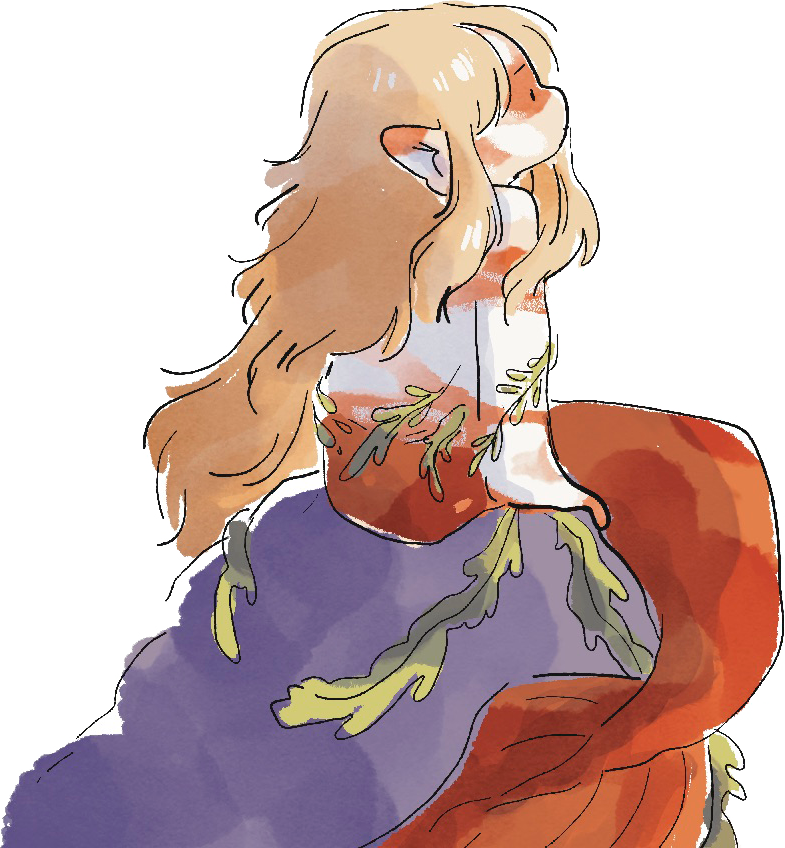
Veronica Agarwal is a Cartoonist and Illustrator from NYC. She graduated from SVA in May 2016 with a BFA in Cartooning. She loves plants, summertime, dogs and her three cats! Her work focuses on mental health, coming of age stories, and friendship. She talks with our Editor about her experience at SVA and how her life, career, and art have developed since graduating.
How was your SVA experience?
I had a wonderful experience at school! I always say this to people who ask me about SVA, but to get the most out of your time there you really have to get involved in activities outside of your classes. I got involved in clubs, such as Cartoon Allies and INK, learning some of my most valuable skills. Being freelance nowadays means you have to wear a lot of hats, and I learnt a lot of things with a safety net; how to table at conventions, how to be a salesperson, how to do inventory for conventions, how to e-mail professionally, how to time manage and keep my business, freelance work, organized.
Being involved also really brought me out of my shell and I started taking on more responsibilities, which I didn’t do as much of during high school. That confidence also helped a lot when it came to marketing myself as an artist.
How was the transition to real life after graduating?
Graduating is weird—there’s a very sharp transition to “reality,” of which I had been warned by friends who graduated before me.
There’s an emotional decline due to a sudden lack of structure; lack of regimented work, and lack of exercise primarily, freelance being a very flexible, but stationary job. If you don’t have the luxury of having a room dedicated to work, you may end up working and sleeping all in the same room, which can get to be a lot for your brain. There’s also an emotional decline due to lack of friends! During school, you have a built-in social circle, scheduled times you see your friends weekly, or school sponsored events you can attend to socialize. After graduation though, a lot of people scatter to different places, or their schedules shift radically due to work.
I’ve been able to combat this by making sure I have structured work hours as well as a specific work location; for me, I have a room in my house where I can go to work. If you don’t have a separate room, working at a desk or keeping your break space separate from your work space can be helpful. Structured work hours help me as well—I make sure that I wake up early, work during the day, break for lunch, and then finish at five. Just try to find times that work best for your mindset. When I have big breaks between projects I tend to sleep in late, play video games all day, and that, while nice, becomes a really unhealthy habit long term.
I also exercise! I may not enjoy the strenuous aspect of it, I do it anyway because it makes me feel accomplished no matter what else I do that day. For example—if I don’t get “enough” work done, I won’t give in to feeling bad about it, because I worked out that day, and that is enough of an accomplishment to me. It’s something that’s ultimately good for my body, and it’s something I have to push myself to do. However, I don’t recommend forcing yourself to work out in a way that makes you miserable—find something you can enjoy a little! Bike, play badminton, go on walks, anything that gets your body moving.
As for the social aspect, I make sure to do weekly video calls with my friends. When working full-time, it’s easy to forget how good it is to talk and laugh with friends. If you’re not going out to see people regularly, like if you work from home, making sure to have calls with friends regularly can keep you emotionally healthy.
How do you handle networking, and maintaining a social media presence?
For me, networking is basically just like friend collecting. There are so many artists whose work I admire, so I just approach networking as “wow, I think your work is amazing, I would genuinely love to be your friend.” Thankfully, this really isn't hard within comics.
For social media, I think it’s important to keep up with what is easiest for you. Twitter comes naturally to me, personally, for posting art and general buffoonery. If Instagram or Tumblr better suit your needs, you should network with those! I will say, even if you don’t want to update your social media every day, you absolutely need to have your email and portfolio site on every one of your social media accounts. Even if you aren't updating them, you should have ways to contact you clearly visible, easy to access, and current. It’s not just for new people who discover you, but for friends or acquaintances who want to recommend you to others for work. And while a friend or acquaintance might hunt for your contact info, potential employers might not. That’s one huge thing that I see people not doing that’s the easiest to fix.
Would you say fanart is important to getting noticed?
I would say this is absolutely integral—at the very least, it was integral to my success. I think it's really easy to think “oh, fan art isn't professional, I shouldn't waste my time on it,” but if you're passionate about it, and you have the free time, you should pour your heart into what you love. When I drew Awful Squad comics, from Polygon’s video series, I was really passionate about them and had a ton of fun doing them. Doing that fanart led me to meet people I admire, making a ton of friends who were into the same content, and got my work to be shared widely and got me a lot of followers and commissions. It helped me grow as an artist and got me back into making comics when I had kind of been in a dry spell.
What are your favorite things to write or draw about?
I really enjoy making work about mental health and mental illness; I like highlighting that these things are nuanced and different for everyone. My forthcoming book is about OCD, which I was diagnosed with last year, I think? Upon diagnosis, I realized this is something I had tendencies toward for a while, but never recognized. I had never understood all the different ways it can present.
I also really like making fun and lighthearted stories—I remember being at Comic Con when I was tabling with SVA, and a woman came up to me and my friend to talk to us about comics. She mentioned she liked that my work was lighthearted and fun, that not all stories need to be dark and scary and full of conflict. I didn’t think so much of it at the time, but I never forgot it. Overall, I think I want to make stories that can be relatable and fun to read, that people can see themselves reflected in.
What is the experience of doing mini comics vs full length books?
It’s definitely daunting at first. However, the first book I did had chapters, each chapter about 12-15 pages, the length of a mini that I would do in college. Having it broken up like that makes it seem much more manageable. The biggest difference to me is settings—learning to make shots interesting when your characters are visiting the same locations. Also, continuity—if you make a character’s bedroom look a certain way, you have to remember to carry that through.
I also got worried that I would get burnt out working on a project with the same characters for such an extended period of time, but thankfully I really haven’t run into that issue. I think because of the way I work—I do all of my pencils and then go back over with inks—it keeps things fresh. I’m never working on the same page for that long.
Do you enjoy doing autobio comics?
I really do. There’s so much to be gained from autobio comics. I really like highlighting special moments in the otherwise mundane. I always joke that hourly comic day is my favorite holiday. You can really see what people care about by seeing what ‘mundane’ things they make comics about. It makes so many ‘lackluster’ things feel really special and I just love that.
They’re also really nice for cataloguing memories, good and bad. Once I’ve preserved the memory in a comic, I feel like I’m able to let it go, which is really cathartic.
How important is it for you to have LGBT characters in fiction?
Really important! Something I’ve talked about with other LGBT people is the idea that while we have an ever expanding amount of queer literature, we don’t always have as stories where a character is queer and that coming out isn’t the center point of their journey. For example: coming out, coming to terms with it, or how it impacts their life vs. them going on an adventure and also they just happen to be queer. So it’s really nice to have stories where we can put LGBT characters in fiction and have their journey be about something else. Like this is undeniably a part of them, but they also get to do these amazing adventures separate from that.
What is your experience with working with an agent?
So, I met my agent, Susan Graham of Einstein Literary, at an SVA senior portfolio event actually. Having someone in my corner throughout my career has been invaluable. Susan will go over my contracts with me and explain things line by line if need be. The last big contract I signed with my writing partner was about 20 pages long between the both of us. We had a meeting with Susan where we read through the entire thing and they explained it to us so we fully understood what we were signing. Contracts can be intimidating, especially when facing them on your own. Having an agent allows me to learn on the job without risk, because they handle assessing the language while I learn to understand what I should be looking for in the first place.
They also attend a lot of my important meetings with me, and are always willing to work with me to attend smaller meetings if I need their guidance. It’s really nice to have someone there as a second set of eyes and ears, as well as have someone who’s going to stand up for you if something seems unreasonable like pay or time restriction, for example. Saying ‘no’ as a team is so much easier than saying ‘no’ as an individual, and Susan is my sounding board when I need help assessing if something is unreasonable or normal for the industry. Even if something is normal for the industry but you can’t do it, agents can help you work with publishers and editors to make things feasible for you.
Susan’s help also allows me to put my entire focus on my workday. I didn’t realize how incredibly helpful that was until recently, when I realized I can work several hours straight without worrying about checking my email to converse with employers about contracts or availability.
They also do a lot of behind the scenes work, such as sending my work around to publishers and letting them know about possible pitches I have. I feel like this got my work in front of a lot of people it may not have gotten to on in my career, and I think it had a bigger impact than I could really know. Them conversing with publishers also let me in on what each publisher expects for a pitch packet, which was amazingly good information.
To what type of artist would you recommend having an agent?
Everyone, to be honest. I don’t know much about illustration, but if you want to get something published, having an agent gives you an incredible amount of backup.
What advice do you have for someone trying to find an agent?
This is hard for me to answer because my experience was atypical, Susan sought me out as opposed to me seeking them out. I know there are a lot of websites that have lists of agents and agencies. I would consider what audience you want to reach with your book and then go from there. You can also take a look at who represents your favorite artists or artists you’re thematically similar to, and do research into that.
I feel like a lot of older people tell us to “be persistent” or to keep emailing companies even if they aren’t advertising openings. For agents you shouldn’t do this. If an agency isn’t accepting queries, wait until they are. If you haven’t heard back right away, be patient! They have a lot of other queries to look through so you may have to wait a bit longer than normal to send a follow up. I’ve heard 4-6 weeks, or longer depending on how large the agency is.
My other word of advice is to make sure you get the agents name, pronouns and information correct. That’s really important and will set you off on the right foot!
How is it working with a writer vs. writing your own stuff?
For me it’s so much easier to work off of a writer’s script. It’s such a relief. In Joey Cavalieri’s second year class, I believe he purposefully gives you an assignment where you work off a script, but I wasn’t in his class, and in school, I always wrote my own stuff. But when I got out of school, I found myself unable to write, and found it difficult to string a story together from beginning to end. My first job had me working on someone else’s script, and then when I started working on my current project (Just Roll With it, to be released from Penguin Random House in 2021), I teamed up with my boyfriend and had him write it. It was such a relief because I felt like he was doing all the heavy lifting.
Does your creative partner being your romantic partner change anything? What's that like?
It’s really nice! I was nervous at first, it was a big step in our relationship and I was scared if something didn’t work out in one aspect, it would affect the other aspect of our lives. But I’m also anxious by nature, and I worry about everything unnecessarily. My boyfriend absolutely crushed the script, which was amazing since the longest thing he had ever written before our graphic novel was a 12 page preview for the same book. I was so proud of him!
Writing seems like the hardest part of the job for me right now. So while drawing is a longer, more labor intensive job, I felt a big relief knowing he was handling the part of it that I felt was the most daunting.
It’s also really nice to be able to easily go back and forth with him. As I got into drawing, I found some of the dialogue was too long to realistically fit into a word bubble, or some scenes needed elongating in order to properly convey the emotion we were aiming for. So I think when working with any writing partner, being able to discuss changes and be flexible with the script is super helpful. I can just ask “Hey can I change this dialogue?” or “I need to make this scene longer, but it would mean I’d need about 3 or 4 more lines, can you help me write it?”
As I mentioned, I’m also very anxious. So Lee, my partner, keeps me stable and helps me not freak out over small things. Sometimes, when I’m working on pages, I get hung up on making small decisions, so it’s nice having someone I trust wholeheartedly to help me decide between Layouts A and B which are, in fact, almost exactly the same.
I think, if anything, I was worried about being selfish or a tough critic with him, but when I get into work mode that isn’t very hard anymore.
INK would like to thank Veronica Agarwal for taking the time to be interviewed!
psst! check out the Winter 2019 Issue to see this interview in print…